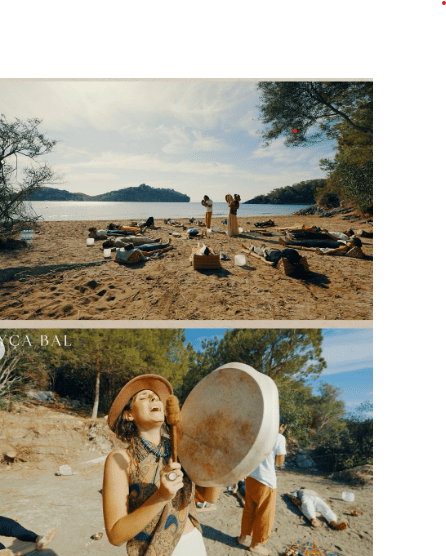
The sun broke, radiant and glorious. Birds, insects, and trees sang in one flawless orchestrated chaos. I sang too, off-key and fearless, high on gratitude. This living splendor was my church, my temple.
At 6:30 a.m., I descended the mountain, ecstatic and hopeful. The day felt full of promise; I felt invincible.
Until I heard the screams … loud, gut-wrenching shrieks.
I hurried toward the sound, my breath catching. It led me to the event hall of the resort where I’m the new fitness manager. It didn’t take long to realize this was no mayday call; something else entirely.
They called this place a sanctuary, designed to ‘nourish the soul.’ Every conceivable spiritual workshop was offered here … Divine ‘belly dance’ of all things. I was never tempted.
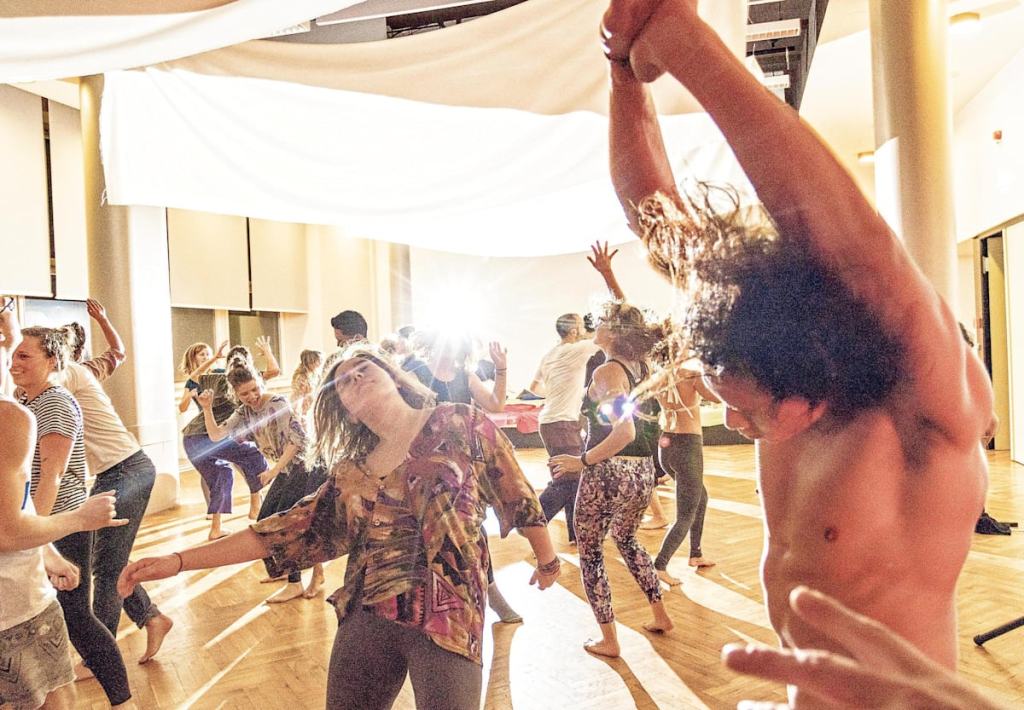
I peered through the glass. A young woman knelt, face flushed, sweat beading on her neck as she screamed. A man lay still, eyes shut, while someone circled a pendant over his head.
The smell seeped through the gaps in the window frame: sweat, incense, and something sickly sweet that I couldn’t identify. In the middle of the room, a woman I recognized as a “healer” floated between them, draped in an actual Superman cape. “Feel that anger in your body!” she commanded, gripping another woman’s shoulders.
And they were paying how much for this?
The calm I had soaked up in the mountains evaporated like morning mist. I turned and walked away.
We must kill time
My room was an elegant space with a walk-in shower, the perks of working at this exclusive resort. I shared it with Can, the chubbiest, most ill-mannered golden retriever I had ever met, whose severe addiction to cheese made him both endearing and impossible. After a quick shower, Can and I headed to the breakfast buffet. I was famished.
Spiritual breakfasts were never served before 9:30 a.m. – a foible born of the resort’s disdain for punctuality. The resort manager, Kemal, often referred to time as a “tyrant” and believed in “no expectations.” Dinner might be scheduled for 8:00 p.m., but guests wouldn’t arrive until 8:30, the meal might not start until 10:00.
“There is no beginning, no ending,” Kemal would say, “Only the eternal now. Only surrender to what wants to unfold through you.”
But none of these people had ever worked a real job, caught a bus at dawn, or felt the crushing weight of other people’s expectations.
By 9:30 a.m., Kemal already smelled of booze. He floated through the breakfast area in his usual costume: a shaven head, layers of beaded necklaces, and wrists weighed down by jangling gold bracelets. “Welcome, beautiful souls,” he greeted a table of new female arrivals, his hands pressed together in mock prayer. I watched from across the room, noting how his eyes lingered and how his hand brushed shoulders a little too often.
Kemal seemed to prefer an all-female staff. Men worked in the kitchen, in maintenance, in roles devoid of guest interaction. But every woman around Kemal was young, beautiful, and desperately in need of the work he offered like a dangling carrot.
“Harem culture dressed in beads and spiritual platitudes.”
Cheating with a smile
I watched the dining room as I filled my plates, one piled high with eggs (the only protein in this vegetarian temple) and another with everything else. The scene felt like watching a movie. Guests shuffled around in their “exotic” robes, chanting “Namaste” or something equally vague.
Leaning toward a waiter, I asked about the morning’s rage group. He gestured toward a table. I glanced over, expecting an aura of healing, a palpable energy. Instead, I saw ordinary people, laughing loudly, mouths full of food, a generic tourist group.
I filled a final plate with fruit, nuts, and sweet pastries and joined a group of ladies on a week-long camp led by a local shaman. I liked her well enough, though she often insisted I step out of my masculine energy, maybe start wearing colorful sundresses. I saw no point in arguing.
The women were radiant, their faces turned toward the sun, eyes closed. Unsure what to make of this, I sat, quietly munching until they “woke up.” They greeted me with what I’ve come to call the “spiritual look,” something that seemed to say, Poor soul, if only you knew what you’re missing by being down there while we’re up here.
“I asked how they were, and they relayed their last night’s spiritual journey (drugs, in my dictionary). I looked at Sameera, who had the widest smile: ‘So what happens next?’ I asked, genuinely curious. ‘When you get back to your regular life, your job, your problems, how does this translate?’
Her eyes were still glazed with whatever chemical enlightenment she’d taken. ‘Love,’ she said, as though revealing the secrets of the universe. ‘It’s all love. Everything is love.’ She leaned forward, her voice adopting that breathy quality I’d heard a dozen times here. ‘When you realize everything is love, you just know what to do. The universe provides.’”
The naked man
I grabbed my laptop, p2oured a jug of coffee, and retreated to the café overlooking the mountains, a place heaven would envy. The café opened to the reception area. That was when I spotted Jessica, fumbling with her bags, an air of annoyance pulsing from every breath.
“What happened?” I asked.
She stopped in her tracks, shifting her weight, and looked directly at me. “Last night, around 2 a.m., I heard this thudding. Like someone walking into furniture repeatedly.”
I listened, eyebrows raised.
“It was coming from my patio. I peeked through the curtains and saw this man, just lying across my sunbed like it was his own backyard.”
“Jesus, Jessica.”
“He was muttering some gibberish.” She ran her hands through her copper-colored hair, exasperation dripping from every syllable. “I called reception, and when they finally showed up… you know what they said?”
I waited.
“The night manager took one look and said, ‘Oh, ayahuasca ceremony ended about an hour ago. Happens all the time. Nothing to worry about.’”
Jessica’s voice rose. “Happens all the time! Like having drugged strangers collapse on your private patio is just like brushing your teeth.”
“‘Are you leaving?’ I asked.
‘I can’t find my damn passport. Why do they even need it for check-out?’ she fumed. ‘And the drinking, the music till dawn. I haven’t slept a wink. I’m done with the whole of Turkey, Lana. Not just this resort. Only last week, I was at a “horse ranch” for so-called “horse therapy”, and they partied until the sun came up.’
Poor horses, I thought.”
I watched Jessica, a renowned American researcher leave, like a woman fleeing a burning building.
The Real Ones
I limited my extravagant buffet meals to breakfast, choosing instead to frequent the staff cafeteria for lunch. It was a cramped space with only three plastic tables and five chairs each, serving the entire resort staff. Most ate outside on the floor. Meals were a strict one hour, no exceptions.
They served typical Turkish “anne yemeği” (mother’s home-cooked dishes) alongside yogurt and store-bought white bread. Occasionally, we’d get “blemished” apples for dessert, even though the resort boasted a massive fruit and vegetable garden, its own organic eggs, an on-site bakery, and signature olive oil. Sometimes I’d come here for breakfast too, which started at 7:00 a.m. sharp: boiled eggs, white cheese, tomatoes, cucumbers, white bread, molasses, and tahini.
By my third visit, I was on a first-name basis with everyone, and those lunches quickly became the highlight of my day.
The real surprise was that, in a country where I didn’t speak the language, most of the staff spoke Arabic, of all languages. I learned they were natives of Hatay, survivors who had fled the devastating earthquake.
At first, they assumed I was European, arrogant or unapproachable. My fit, shredded look often made me the alien. This changed when one older woman pointed to my muscles and asked a long question in Turkish. I caught the word “Nerelisin” (Where are you from?). I answered, “Ürdün” (Jordan), and that was all it took.
Aysha, the cleaner, was a brilliant cook; her husband Emre worked as the sous chef. I was stunned when she asked for my Instagram account; I followed her and discovered what a diva she was: red lips, high heels, and perfectly styled hair when she wasn’t wearing her apron and bouffant cap. Back home, she had been a music teacher. Despite everything, there was always a spark in her eyes when she talked about her plans for the future.
Mustafa, the chef, was a biker who looked every bit the part. He had owned a restaurant back home and would bribe me with food all day, either to woo me or to get my honest opinion. Whenever I animatedly praised his cooking, he’d puff up his chest and flex his muscles. I loved Mustafa the most.
I wanted to ask them how they carried on. How they rebuilt their lives without thousand-dollar cacao ceremonies, healing crystals, or Superman capes. How they bore their grief without turning it into content.
The Confrontation
Over the weeks, I had spoken to Kemal numerous times about my contract. Three months had passed, and I hadn’t been paid a single Turkish lira. He would praise my work, promise to resolve the issue, and then conveniently forget.
“Kemal, we need to resolve these issues today,” I said, cornering him in his office.
The smell of alcohol was stronger here, mixed with enough incense to mask a morgue.
He looked up from his MacBook Pro, smiling. “Ah, Lana, my warrior goddess. Please sit down. Every problem has a solution. What is money, my dear, but another blindfold?”
So said the man who had a walk-in closet for his shoe collection.
I snapped. “Save it for the guests, Kemal. I need to be paid today.”
His smile wavered. Face twisted with agitation, but he quickly regained his peaceful guru mask.
“What do you care? My money is just pocket change to you. Do you know what working here feels like? Like working in a damn sweatshop.”
His face hardened. “Our plans have changed. We no longer need a fitness manager, and if we do, we will hire a Turk. Your services are no longer needed.”
I stepped closer to his desk, closing the distance. He swallowed his words, a flicker of fear crossing his face.
“You will leave. Today.”
“I’m already packed, darling,” I lied. “And Kemal? I know how to get what I’m owed.”
The Goodbye
The kitchen fell silent when I entered. Fatma looked up from her prep work, saw my tears, and dropped her knife to embrace me. Mustafa appeared, flour still on his hands, and soon I was surrounded by these earthquake survivors, people who had lost everything, offering me comfort.
When I walked out, word had already spread. Some of the girls I had befriended avoided me. But others came to say goodbye. The groundskeeper gave me a thumbs-up, saying, “Güçlü” (strong). Kemal’s secretary hugged me, put her palm on my chest, and said, “I know this heart. A good heart, but your mouth, you speak. You must learn not to look.”
It was Can, though, who broke me.
That chubby golden retriever, with his complete disregard for personal space, followed me as I carried my luggage to the main entrance, his tail wagging as if this were just another adventure. When my friend arrived to pick me up, he tried to get in the car.
“No, buddy,” I whispered, “You have to stay.”
He pushed his massive head against my legs, completely confident that wherever I go, he goes. I collapsed to my knees in the resort’s elegant driveway, weeping. “How could I leave this ridiculous creature who thinks I’m his person?”
I had to physically remove him to get into the car. As we drove away, he ran after us, chubby and determined, until he vanished from view. I cried for three days.
What Remains
I still think of that place, not because I long to return, but because certain moments linger. The mountain mornings with Can. The laughter in the kitchen with Aysha. The sunlight streaming through the café windows while I wrote.
The sacred is still there, on that mountain, in the sunrise moments and genuine human connections. It doesn’t belong to anyone. It cannot be sold. It can only be experienced.

Leave a Reply