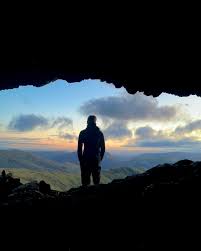
They were eating when I found them
I was walking Lado Asatiani for the pleasure of it. A narrow grid in Sololaki where 19th-century oil barons built their mansions, wooden doors so heavy they still resist the shoulder when you push against them. I found the book shop hidden in an Italian courtyard (Tbilisuri Ezо); a tiny space packed with the scent of history and dust. A small bell clicked as I entered. In the back, sat Giorgi and his wife, deep in their Samkhari – a mid-day meal of warm Shotis Puri and a block of Guda, that sharp, salt-heavy cheese aged in sheepskin. Between the stacks of books stood a decanter of amber Mtsvane pulled from a Qvevri buried in the yard, I bet. It was tannic and structurally heavy, served with bitter walnuts and a jar of dark honey, the meal was a slow, quiet ritual I felt ashamed for interrupting.
I apologized with the over-earnestness of a foreigner and began to retreat, but they would not hear of it. Honestly, I wouldn’t have traded that company for the world.
They had traveled in their youth – deeply and seriously, in the way of Soviet-era Georgian geographers who mapped the Caucasian frontier in the 1960s and 70s. From those expeditions they brought back books, photographs, and manuscripts – along with things I suspected were far heavier than paper.
When I told Giorgi I was interested in Georgia – the old, the new, and whatever lay beneath the visible – he set down his wine without a word and led me to the back of the shop.
The corner was dusty but well-lit. Boxes and shelves crowded the space. Maps folded and refolded until the creases had become canyons, and photographs that had slid between other photographs, undisturbed for decades. He left me on the floor with a box of albums and went back to his work.
I sat flipping through the photos and felt something I have no clean word for – a nostalgia aimed at a life I had not lived. It was a knowing deep in the body: the realization that you can belong somewhere you have never been.
Perhaps forty minutes passed. Perhaps more. Giorgi returned, beaming with the particular joy of a man who has waited years to show someone a secret and has finally found the right person. He knelt and placed a single black-and-white silver-gelatin print before me.
The image was entirely alien to the Georgia I thought I knew.
It was a landscape of vertical knife-edges. Sedimentary walls rose in jagged fins from an ancient floor, tilted and stacked by pressure. The place had a name: Alesilebi. The Sharp Walls. In the center of the grain, a researcher from a 1960s survey stood pointing at a massive curved bone protruding from the silt.
It was the shoulder blade of an Archidiskodon meridionalis – the Southern Elephant. It had walked this ground when the earth was the floor of a Miocene sea, ten million years before the thought of us. The bone was 87 centimeters across, jutting from the wall as though the earth were simply pausing before releasing it.
Giorgi let me look. He understood that looking takes time.
Then, leaning close, dropping his voice to the register of a man sharing a confidence, he told me about the Mertskhlebis Kalaki.
The City of Swallows.
He spoke of the place as one speaks of someone missed. He told me about the cliffs of Datvis Khevi, the Bear Gorge, where the silt rises in shelves so soft you can carve your name with a fingernail.
Every spring, he said, a miracle of navigation occurs. Thousands of swallows find their way back from the heat of Africa to these specific walls. They return to the same mud cups they mortared to the cliffs a year ago, rebuilding a metropolitan architecture, balconies above balconies, district above district, a city built entirely by creatures that weigh less than a letter.
But the birds were not there yet.
They were, at this moment physically in transit crossing the Mediterranean, threading through Turkey, still days from arrival. The city existed in complete physical perfection. Every nest was intact.
But there was not a single heartbeat inside it.
Holding my gaze he said:
“If you go now, you will be the sole living occupant of a city built for thousands.
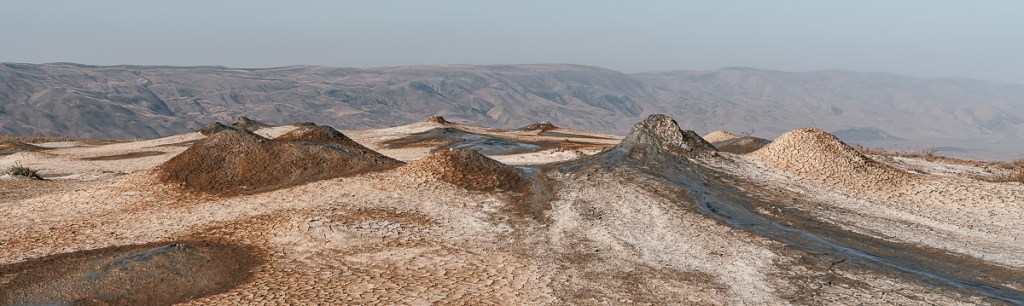
The Hard Ground
Back in my apartment in Vera, Tbilisi’s leafy, Bohemian quarter, I sat at my desk and began the work of converting a curiosity into a plan. The poetic names Giorgi had given me, the Silent Metropolis, the Ghost City, found nothing online. I pivoted to the technical: Mertskhlebis Kalaki, Datvis Khevi. This opened the door.
The Agency of Protected Areas confirmed the existence of Pantishara-Datviskhevi. It offered coordinates and regulations, the skeleton of a place, but none of its skin
Following Giorgi’s advice, I contacted Mindia, an expedition expert and a man who knows the veins of the desert. He confirmed what Giorgi had told me, then he stripped away every remaining illusion of ease. This is what a good guide does.
The journey would begin 130 kilometers east of Tbilisi, in Dedoplistskaro, a frontier town whose name means the Queen’s Spring. This was the only gateway for what Mindia called the Double-Permit Protocol. At the Vashlovani National Park Office, I would present my passport for the first permit. With that in hand, I’d proceed to the Border Police for the second: a Frontier Zone Permit. Datvis Khevi sits on the Azerbaijani border. The military treats the absence of this document with the same cold interest they show a person wandering into a live fire zone. The document exists because the fence exists.
The mechanical requirements were equally precise. A high-clearance 4×4 was the minimum viable platform, a Lexus GX470 or a Land Cruiser with low-range gearing and All-Terrain tires. The Shiraki Plateau is a vast steppe that offers the false confidence of open ground. But at this time, the rain transforms the black soil into “Shiraqi Mud”, a substance with the adhesion of wet concrete and the patience of something that has swallowed vehicles before.
“You do not drive Shiraqi Mud,” Mindia said. “You survive it.”
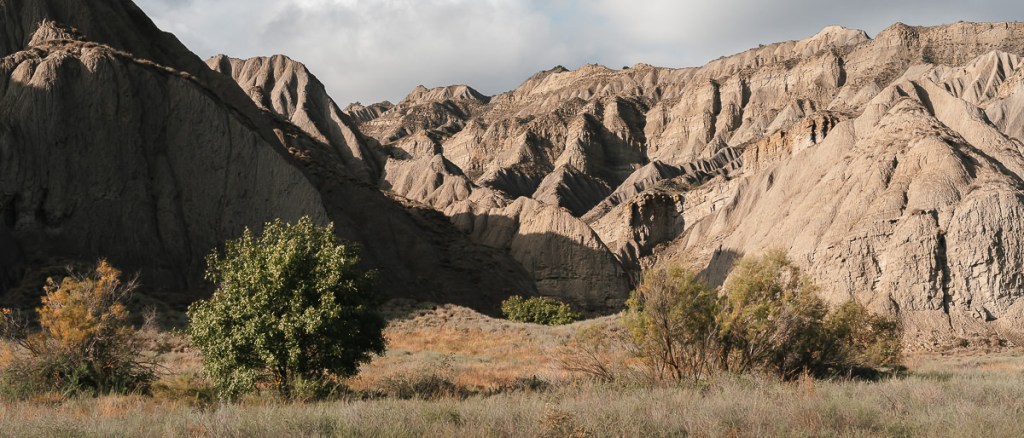
Dedoplistskaro is the last fuel point before 150 kilometers of zero infrastructure. I would carry a 20-liter jerry can. There is no mobile reception in the canyons, none. Without offline maps, it is dangerously simple to drift past the pistachio groves and into the militarized frontier fence, which does not announce itself.
Finally, with the matter-of-fact delivery of a man describing the weather, Mindia addressed the Blunt-nosed Vipers.
Macrovipera lebetina. Heavy-bodied and unhurried. In the cool mornings, they emerge from winter sleep to sun themselves on the sandstone ledges. The same ledges I intended to move through. The vipers would not retreat; they have no evolutionary memory of a reason to fear a human. I was the intruder; the ledge was their living room.
“Never reach onto a shelf above eye level,” Mindia said.
The Manifest
I did not pack. I equipped.
From the technical inventory of MPLUS and WT Georgia outfitters – who supply expeditions rather than weekenders – I assembled a manifest built on a single rule: leave no margin for the wrong kind of surprise.
A Kelty bag rated to minus seven Celsius. A 30-liter pack sized for the tight geometry of canyons. Merino base layers for the mathematics of the desert- floors baked by afternoon sun that drop to near-freezing in the damp midnight. A GORE-TEX shell for the rain the Shiraki knows how to produce.
At GSS I collected the Lexus. It was already fitted with an expedition shovel, a full-size spare, and the 20-liter fuel can. I added a Jetboil for rapid heat and a Petzl headlamp of sufficient lumens to navigate the dark by the light of pure intention. For rations: beef jerky, salami, Churchkhela, and hard Guda cheese
In Dedoplistskaro, I stopped at a tone bakery for fresh shotis puri. I filled three five-liter jugs with mountain water and topped the tank at the last station in town.
Then I left the pavement.
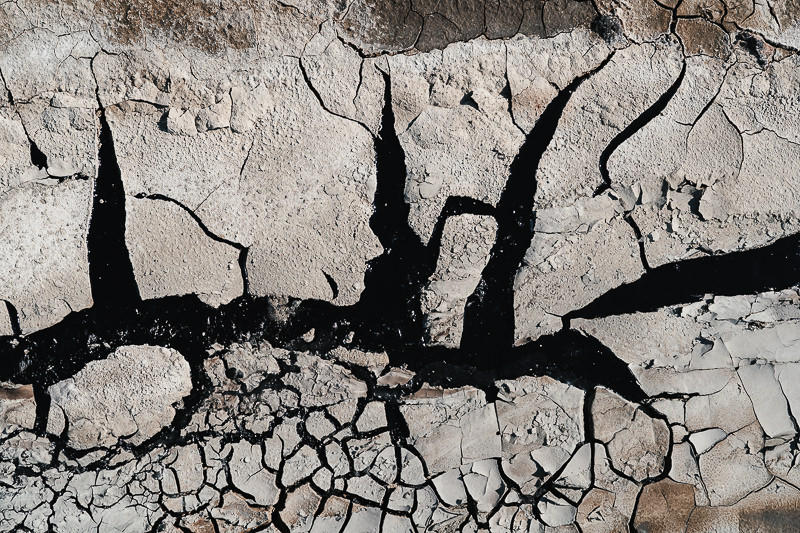
The Big Shiraki Plateau opens before you the way geological time opens-gradually at first, then all at once, then beyond the capacity to measure.
The soft green hills of the capital had long ago dissolved into the scorched yellow-gray steppe of Outer Kakheti. Now, the steppe had flattened into this: a vast, elevated grassland that felt less like the roof of the world and more like the world before roofs were invented. Treeless. Horizonless. An enormous, indifferent sky.
I passed the Big Shiraki Abandoned Airfield long concrete strips returning to the plateau at the pace of decades. Beyond the airfield, nothing qualified as human. The road became a track. The track became a suggestion. The suggestion became my problem. By the time I reached the rim, the silver paint of the Lexus had vanished under a thick shroud of dust.
Then, the plateau simply ended.
The earth fell away in front of the Lexus as though the ground had decided to stop pretending to be flat. Below lay the Pantishara Gorge. The canyon descended in walls of layered Miocene sediment – ten million years of ancient seafloor compressed, tilted, and exposed by the slow, patient violence of erosion. It was the color of old bone. The color of time that has no interest in being beautiful, but is.
I dropped the transfer case into 4-Low and began the descent into the deep silt of the canyon floor.
The signal died at the rim. Three bars, two, one, zero, then not even the pretense of connection. Nothing. It was the silence of genuine remoteness, which differs from the silence of a quiet room the way a wild animal differs from a photograph of one.
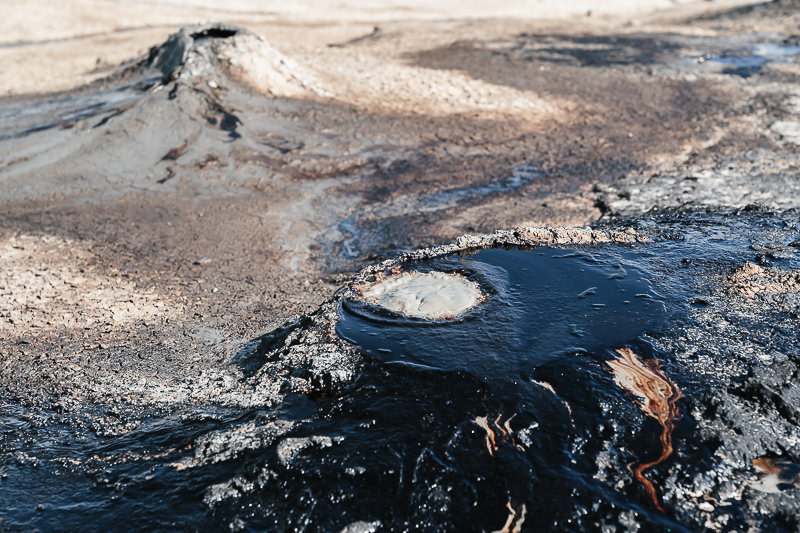
The gorge deepened and narrowed. The walls rose. The afternoon light hit the silt faces at an angle that turned them the amber-gold of the Mtsvane in Giorgi’s glass. Somewhere in these walls was an 87-centimeter shoulder blade. Somewhere above me, crossing the warm Mediterranean or threading the thermal columns of the Turkish coast, thousands of birds were navigating by instruments older than language. They were flying toward a city they had left six months ago, expecting to find it exactly as they had left it.
Empty. Perfect. Intact.
I was, as Giorgi had promised, arriving first.
The city was waiting.
Part II: The Silent Metropolis

Leave a comment