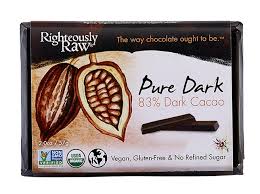
“Dark chocolate is chocolate. It’s a premium dessert bar that costs three times more and delivers 25% more calories than a Snickers.”

The research claiming otherwise was funded by Mars, Inc.
In the hierarchy of modern nutritional delusions, dark chocolate occupies a peculiar throne. Walk into any upscale grocery store and you’ll find it positioned not among the candy bars, but in the wellness section, its packaging whispering of antioxidants and heart health. We eat it with the solemnity of taking a supplement, a square after dinner, and feel virtuous.
This is marketing genius meeting human susceptibility at its finest. But it is not science.
The biological reality of dark chocolate – what it actually does inside a human body, as opposed to what we’ve been conditioned to believe it does – reveals one of the most successful acts of corporate-funded nutritional mythmaking. The story begins, as these stories often do, with a grain of legitimate research and ends with millions of consumers paying premium prices for what amounts to high-calorie confection dressed in the language of health.
THE FLAVANOL STUDIES: REAL SCIENCE, COMMERCIAL FICTION
The scientific foundation for dark chocolate’s health halo rests on a specific class of compounds called cocoa flavanols – polyphenolic molecules found in cacao beans that have, indeed in clinical controlled studies shown that “Cocoa flavanol supplementation” can improve endothelial function, reduce blood pressure, and enhance blood flow. The research is legitimate. The problem is everything that happens between that research and the chocolate bar in your hand.
What the studies actually tested: highly concentrated “cocoa flavanol extracts”, typically delivering between 400 and 1,000 milligrams of flavanols daily in controlled doses. These extracts are pharmaceutical-grade isolates, standardized and measured with precision.
Here’s what you’re actually eating: a processed confection that has been fermented, roasted at temperatures exceeding 120°C, often alkalized with potassium carbonate (a process called “Dutching” that destroys up to 90% of remaining flavanols), then combined with substantial quantities of sugar and cocoa butter. The final product – even at 80% cacao content – contains such drastically reduced flavanol levels that achieving study-equivalent intake would require consuming between 100 and 400 grams of chocolate daily.
The arithmetic is brutal. To match the dosage from clinical trials, you’d need to consume maybe up to 2,280 calories of 80% dark chocolate. Daily. Along with 60 grams of sugar and 171 grams of fat.
WHO FUNDED THE CONFUSION?
Mars, Inc. – the conglomerate behind M&M’s, Snickers, and Dove – has been the primary architect. In 1982, the company established a chocolate research center in Brazil to study cocoa flavanols. By the 2000s, this had evolved into Mars Edge, a segment dedicated to nutrition research that subsequently launched CocoaVia supplements.
The crown jewel: COSMOS (COcoa Supplement and Multivitamin Outcomes Study), a five-year trial of 21,442 participants beginning in 2015. Officially “investigator-initiated” by researchers at Brigham and Women’s Hospital and Harvard Medical School, Mars Edge actually provided the grants, infrastructure, and all study pills. Lead investigators Dr. JoAnn Manson and Dr. Howard Sesso disclosed receiving these Mars grants.
Published in 2022, COSMOS found cocoa extract “did not significantly reduce total cardiovascular events” – the primary endpoint failed. But a secondary outcome showed 27% reduction in cardiovascular death. Mars got ambiguous results that generated protective headlines while the study technically failed. The kicker: participants took 500 mg flavanols in capsules, not chocolate, yet media coverage conflated supplements with chocolate bars.
Hershey pursued the same strategy through its Center for Health and Nutrition. Notably, a 2008 Hershey-funded trial found no neuropsychological or cardiovascular benefits from dark chocolate versus placebo – a finding that received no media attention.
Barry Callebaut, the world’s largest cocoa processor, went regulatory. Since 2005, the Swiss company conducted 20+ studies using its proprietary ACTICOA® process. In 2012, Barry Callebaut secured the first EU health claim from EFSA: 200 mg cocoa flavanols “help maintain endothelium-dependent vasodilation.” The EU granted five years of proprietary exclusivity. In 2022, Barry Callebaut won FDA approval for a qualified health claim on high-flavanol cocoa powder.
The architecture: Mars funds Harvard-affiliated trials generating legitimacy, Hershey quietly funds parallel research, Barry Callebaut secures regulatory claims. The consumer sees EFSA approval, Harvard studies, FDA language – and concludes dark chocolate is health food.
PROCESSING: WHERE HEALTH CLAIMS GO TO DIE
Understanding why commercial chocolate can’t deliver on the flavanol promise requires understanding what happens to a cacao bean on its journey to becoming a Lindt bar. The process is the executioner of every health claim.
Fermentation comes first – the beans are piled and left to ferment for several days, a crucial step for developing chocolate flavor but one that begins the degradation of heat-sensitive flavanols. Then comes roasting, where beans are subjected to temperatures between 120°C and 140°C for 30 to 45 minutes. This is necessary; it’s what creates the deep, complex flavors we recognize as chocolate. It’s also where the majority of remaining flavanols are destroyed.
For many commercial chocolate products, there’s a third processing step that completes the annihilation: alkalization, or Dutching. Cocoa is naturally acidic and astringent – qualities that make it bitter and harsh. By treating cocoa with an alkaline solution, manufacturers can neutralize this acidity, darken the color, and create a milder, more universally palatable product. The Dutch process, named after its inventor, Dutch chemist Coenraad van Houten, is so effective at reducing bitterness because it’s equally effective at destroying flavanols. Studies have shown that alkalizing cocoa can eliminate up to 90% of its flavanol content.
THE RAW CACAO GAMBIT
Faced with this evidence, the health-conscious consumer often pivots to raw cacao – the supposedly unprocessed, unroasted form that retains maximum flavanol content. The reasoning seems sound: if processing destroys the beneficial compounds, consume the unprocessed version.
Raw cacao does indeed contain significantly higher flavanol levels than roasted cocoa or finished chocolate. It’s also six to seven times more expensive, carries a small but real risk of microbial contamination (including Salmonella, since it bypasses the sterilizing effect of high-heat roasting), and still requires consumption in quantities that make it nutritionally absurd.
Raw cacao nibs contain approximately 600 to 800 calories per 100 grams, along with 40 to 50 grams of fat. They’re also profoundly unpalatable without added sugar – their natural bitterness is precisely what all that processing is designed to eliminate. Achieving meaningful flavanol intake through raw cacao means consuming a substantial caloric load from a single source, displacing other nutrients, and still falling short of the concentrated doses used in clinical trials.
It is, as they say, a “less worse” option. But less worse is not good. It’s certainly not medicine.
THE CALORIC ELEPHANT
Let’s place this in the context that matters: the actual nutritional toll of using chocolate – even the darkest, highest-quality chocolate – as a daily health intervention.
A typical premium 80% dark chocolate contains approximately 570 calories, 15 grams of sugar, and 43 grams of fat per 100 grams. To achieve the minimal 400-milligram flavanol intake from clinical trials, you’d need to consume approximately 400 grams of this chocolate daily- a massive, diet-derailing 2,280 calories, carrying 60 grams of sugar and 171 grams of fat.
By comparison, a standard Mars bar contains roughly 450 calories and 59 grams of sugar per 100 grams. Yes, the sugar content is higher. But the caloric density is actually lower than premium dark chocolate, and no one is pretending a Mars bar is health food.
BERRIES, BEANS, AND OPPORTUNITY COST
The most damning evidence against dark chocolate as health food comes from considering what else those calories could buy you, nutritionally speaking.
A 100-gram serving of blueberries delivers approximately 57 calories, substantial fiber, vitamin C, vitamin K, and a flavonoid profile that rivals or exceeds dark chocolate’s—without the sugar overload, without the caloric density that makes overconsumption nearly inevitable. The same can be said for blackberries, strawberries, and a host of other anthocyanin-rich foods that deliver genuine antioxidant benefits without requiring you to consume a meal’s worth of calories.
This is the math that marketing doesn’t want you to do.
THE VERDICT: DESSERT IS DESSERT
What we’re left with, once we strip away the funded studies, the strategic marketing, and the hopeful thinking, is this: Dark chocolate is chocolate. It is a calorie-dense confection made primarily of fat and sugar, processed in ways that destroy the very compounds claimed to justify its consumption, marketed at premium prices to consumers who’ve been convinced they’re making a health-conscious choice.
If you love dark chocolate – like me -, eat it. Enjoy it as what it is: a rich, complex, indulgent food that delivers pleasure. That’s sufficient justification. Pleasure matters. But call it what it is.
It’s a treat. Let it be one.


Leave a comment