First composed in April 21st, 2023
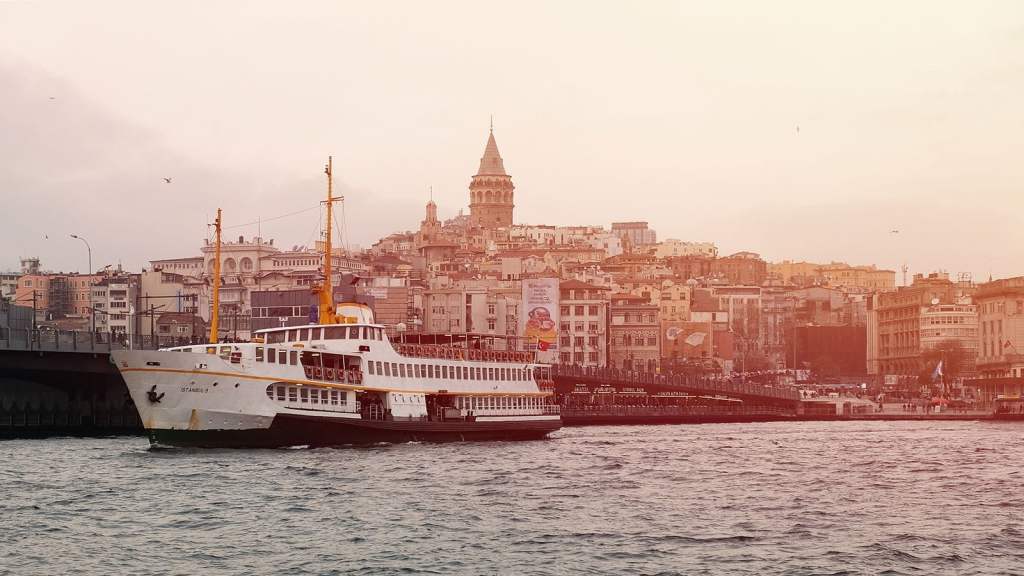
The ferry cuts through the Bosphorus like a knife through denial, its wake trailing behind like all the B.S we tell ourselves about why we stay in places that slowly kill us. In the mechanical chaos of urban transit—bodies pressed together like sardines (I’m sure sardines are none too thrilled about squeezing our nose into their business)—engines roaring, the relentless pulse of a city that never sleeps and frankly needs therapy, there exists a paradox that’ll blow your mind: moments of profound stillness can emerge from the most turbulent motion.
These are the spaces where transformation begins, not in some sanitized retreat center where they charge you $200 to eat quinoa and pretend you’re enlightened, but in the eye of the storm we call modern life.
And let me tell you something—if you think this stuff is woo woo, run for your life, because it’s just gonna get worse from here. Nitzsche is already rolling in his grave, and I’m just getting started.
The Pull of Sacred Spaces (Or: Why We’re All Secretly Graveyard Junkies)
We are drawn to places where time seems to slow, where the weight of history presses against the present moment like a thumb on a bruise—or like that person who insists on standing too close to you in elevators. Cemeteries, ancient ruins, mountain peaks—these spaces serve as portals, not to the past or future, but to a deeper layer of the present we rarely access because we’re too busy scrolling through our phones and pretending we’re not dying.
Look, I’ve always been an aggressively scientific/logical person—the kind who rolls their eyes at horoscopes and thinks crystals are just expensive rocks. But life has tamed that a little, probably because life has a wicked sense of humor and enjoys watching skeptics eat their words. There is so much out there that we may never understand, yet experience and feel. I’m living my life now with as much an open heart/mind/soul as I can manage without completely losing my sh.. or becoming one of those women who talks to cats (I do actually, and trees)
In these sacred interruptions, we encounter what mystics have long understood but most of us are too chickenshit to admit: the self is not the solid, continuous thing we imagine it to be. Instead, it is more like water—capable of taking the shape of whatever container holds it, yet always retaining its essential nature. The question becomes: what containers are we choosing, and are they worthy of what we pour into them? Or are we just adapting ourselves into oblivion like some kind of spiritual contortionist?
The Seduction of the Metropolitan (AKA The Big City Mindfuck Supreme)
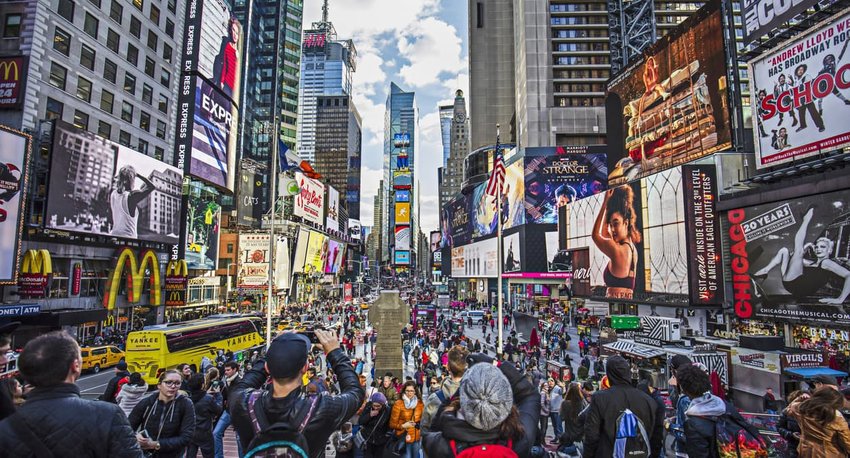
Great cities are masterpieces of collective human imagination, monuments to our capacity for creation and destruction in equal measure—basically, they’re humanity’s greatest hits album, but half the songs are about heartbreak and the other half are about toxic relationships. They promise everything: opportunity, culture, connection, the intoxicating sense of being at the center of what matters. They’re like that gorgeous, toxic ex who keeps texting you at 2 AM with “u up?” messages—you know it’s bad for you, but damn if it isn’t thrilling.
The urban dweller learns to navigate contradictions as naturally as subway systems (and with about as much grace). We celebrate individualism while moving in herds like designer sheep. We seek authenticity in environments built on artifice—it’s like looking for organic vegetables in a plastic factory. We long for connection while living among millions of strangers who’d step over our dead bodies to catch the morning train, then post about it on Instagram with the caption “Monday mood.”
This is not hypocrisy—it is the human condition made visible, concentrated, and accelerated to the point where you either wake up or break down. Cities are basically human nature on steroids, and we’re all just trying to keep up without pulling a muscle.
Cities change us slowly, imperceptibly, like rivers carving canyons or like cigarette smoke seeping into your lungs while you’re just trying to walk to the fucking gym. (Seriously, I hate smoking with a vengeance—like I skipped weddings, friend gatherings, family events because I will not be around smokers, and here I was in a city where EVERYONE is a heavy smoker. Children maybe? I’m not even sure about that.) We adapt without realizing we are adapting. We compromise without acknowledging we are compromising. We become fluent in the language of survival that every great city teaches: how to want what we can have, how to justify what we cannot change, how to find meaning in the space between our ideals and our reality.
And here’s the kicker—we get so good at this adaptation dance that we forget we’re dancing at all. We think we’re standing still while the whole world spins around us like some kind of urban ballet from hell.
The Tyranny of Adaptation (Or: How We Become Strangers to Ourselves Without Even Noticing)
There is a difference between growth and adaptation, and if you don’t know the difference, you’re probably already fu..ed—or at least spiritually constipated. Growth expands our capacity; adaptation often diminishes it, like emotional shrinkage in cold water. When we adapt to environments that demand we betray our essential nature, we engage in a form of spiritual colonization—we become occupying forces in our own lives, and the resistance is getting weaker by the day.
The smoker who develops tolerance to poison. The artist who learns to create what sells rather than what moves them (hello, capitalism, you soul-sucking vampire). The person who stops noticing the beauty around them because survival requires constant vigilance—like living in a beautiful prison where the bars are made of billboards and the guards are your own expectations.
What did I do when faced with a city full of smokers? Just let it go. It still bothers me, but doesn’t drive me crazy anymore. Take that and apply it to almost everything—the aggressive drivers, the noise pollution, the fact that everyone’s constantly late but somehow this is socially acceptable—and you get the jest of it all. (Yes, I know it’s “gist,” but “jest” feels more appropriate because this whole situation is basically a cosmic joke.)
These are not failures of character but inevitable outcomes of systems that prioritize function over flourishing, profit over soul, fitting in over belonging. It’s like we’re all playing a game where the rules keep changing, but nobody told us we could stop playing.
Yet within this apparent trap lies a profound teaching that’ll either save your life or make you want to burn everything down: the very tension between who we are and where we are can become a source of awakening. When the gap between our inner landscape and our outer circumstances becomes too wide to bridge—when you realize there’s an un-gapable gap (yes, I just invented that, Webster sorry)—you are forced to choose. This choice is perhaps the most fundamental act of human agency we’ve got, and it’s scarier than a horror movie because it’s real.
The Paradox of Belonging (Spoiler Alert: You Don’t Find It, You Create It, Like IKEA Furniture But for Your Soul)
We spend our lives searching for places where we belong, like spiritual nomads with really expensive luggage, not realizing that belonging is not a destination but a practice. It’s not about finding a place that accepts us as we are—good luck with that, the world is pickier than a Michelin-starred restaurant—but about learning to be fully ourselves wherever we are.
This is the difference between fitting in and belonging: fitting in requires us to change (usually into something we don’t recognize); belonging requires us to remain true (which is somehow both the easiest and hardest thing in the world).
The great cities of the world are filled with people who have confused adaptation with belonging. They have learned to navigate the maze without questioning whether they want to be in it—like really skilled rats who’ve forgotten they’re still rats in a maze. They have become skilled at surviving environments that slowly erode their capacity for joy, wonder, and authentic connection—like spiritual carbon monoxide poisoning, but with better Wi-Fi.
But sometimes, in moments of unexpected grace—on a ferry, in a cemetery, in a conversation with a stranger who turns out to be a Canadian-looking French guy who speaks Arabic and came from Jordan (I mean, what are the odds? It’s like the universe is playing some kind of cosmic bingo)—we remember what we have forgotten. We remember that we are not just consumers of experiences but creators of meaning. We remember that we have choices we had forgotten we had, buried under layers of “this is just how things are.”
The Art of Letting Go (Or: How to Stop Clinging to What’s Killing You, A Masterclass in Emotional Detox)
The deepest spiritual teachings often come disguised as practical problems that make you want to scream into a pillow (or at strangers on public transport). The job that no longer serves us but pays the bills. The relationship that has run its course but has good Netflix access. The city that has given us everything it can and now asks for more than we can give—like an emotional vampire with really good PR.
These are not just logistical challenges but invitations to practice the art of letting go—and let me tell you, it’s an art form most of us suck at worse than a broken vacuum cleaner. We’re basically emotional hoarders, convinced that every experience, every connection, every comfortable misery is too precious to release.
Letting go is not about abandoning responsibility or giving up on commitment (though your therapist might disagree). It’s about recognizing when our attachment to how things have been prevents us from seeing how they might become. It’s about trusting that the qualities we have developed in one context can flourish in another—like emotional recycling, but less depressing.
It’s about understanding that endings are not failures but completions—and sometimes the universe has to kick you out because you’re too stubborn to leave on your own. The universe is basically that friend who stages an intervention when you’re dating someone terrible, except with more cosmic timing and less awkward silences.
When we let go gracefully (or even ungracefully—let’s be honest, most of us let go like we’re being dragged away from a buffet), we discover that what we thought we were losing was actually what was holding us back. The city that seemed essential to our identity. The role that felt like our purpose. The version of ourselves that we had worked so hard to construct and maintain, like a very expensive house of cards in a windstorm.
In releasing these, we make space for something more authentic to emerge—though what emerges might be as surprising as finding out your quiet neighbor is actually a competitive yodeler.
The Geography of the Soul (Navigation for the Spiritually Lost, No GPS Required)
Perhaps the most important journey we can take is not to a new place but to a new way of being in place. This requires us to develop what we might call “spiritual geography”—the ability to read the landscape of our inner life with the same attention we give to external maps, Instagram feeds, and dating apps (though considerably less swiping involved).
Where do we feel most alive? What environments call forth our best qualities? When do we feel most like ourselves? These questions are not about finding the perfect place—newsflash: it doesn’t exist, and even if it did, it would probably have terrible Wi-Fi—but about understanding the relationship between our inner and outer worlds.
They help us recognize that every place we inhabit is also inhabiting us, changing us, molding us, sometimes into something we don’t recognize—like spiritual play-doh in the hands of a hyperactive child named Society.
The person who leaves the city is not necessarily wiser than the one who stays (though they might have better air quality). The person who stays is not necessarily more committed than the one who leaves (though they might have better takeout options). The wisdom lies in recognizing which choice serves not just our comfort but our growth. It lies in understanding that sometimes the most radical act is to stop adapting and start living—revolutionary stuff, I know.
The Eternal Return (Or: Why All Journeys Are Basically Circles, Like Washing Machines But With More Meaning)
In the end, all journeys are circular—like that ferry crossing the Bosphorus, like the prayers that kept pulling me back up that cemetery hill, like the friends who suddenly want to see me now that I’m leaving (funny how that works, isn’t it?). We leave in order to return. We return in order to leave again. The ferry that takes us away from one shore delivers us to another, and the waters that separate also connect—it’s like cosmic Uber, but with more existential significance.
This is the rhythm of a life lived consciously—not a straight line toward some imagined destination (because straight lines are overrated anyway), but a spiral that deepens with each revolution. Sometimes you gotta get kicked out of paradise to realize it wasn’t paradise at all—it was just a really expensive prison with good catering.
The city will always be there, with its promises and its demands, its gifts and its costs, like a high-maintenance partner who’s really good in bed but terrible with money. But we are not the same person who first answered its call. We carry within us now the knowledge of what it means to choose, to let go, to trust the current that carries us toward whatever comes next—even when we don’t know what the hell that is and GPS is useless.
In this space between departure and arrival, between what was and what might be, we discover that home is not a place but a practice. It’s the art of being fully present to our own life, regardless of where that life unfolds. It’s the courage to remain open to transformation, even when transformation requires us to leave behind everything we thought we knew about ourselves—which, let’s be honest, probably wasn’t that accurate anyway.
The waters of the Bosphorus flow in both directions, connecting seas that seem separate. Perhaps this is the deepest teaching of all: that in the space between one world and another, we find not division but connection, not loss but possibility, not an ending but a beginning that has been waiting for us all along—probably with a really good story to tell and possibly some decent coffee.
And if that’s not worth floating about in peaceful happiness until the next day, then I don’t know what is. Though I’m pretty sure it beats standing in traffic thinking about how much you hate your commute while slowly losing your will to live.
Note: No sardines were harmed in the making of this metaphor, though several are probably still annoyed about the whole overcrowding stereotype.

Leave a comment